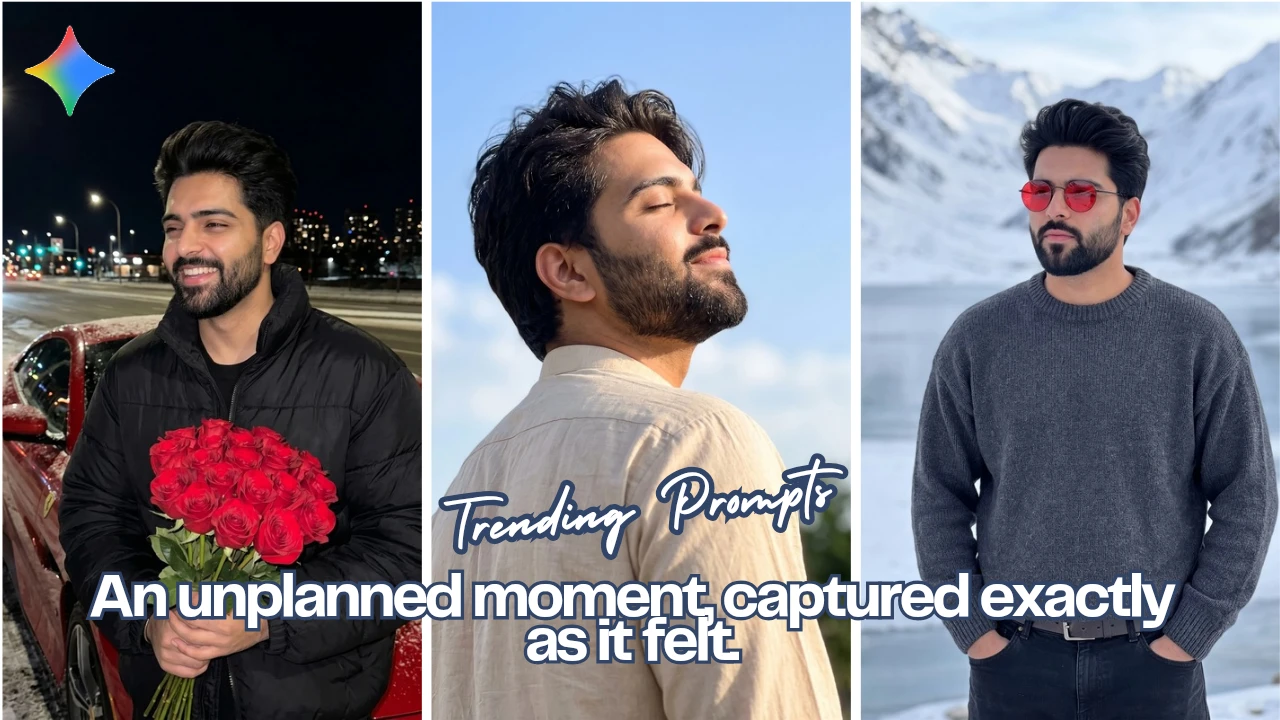
There’s something oddly powerful about photos that don’t look planned. A slightly tilted frame, a missed focus, a bit of harsh sunlight hitting the lens these imperfections make an image feel real. That’s exactly the direction many creators are moving toward now: less polish, more authenticity.
Using tools like Google Gemini, it’s possible to recreate these raw, human moments with surprising accuracy. The key isn’t just writing prompts it’s understanding how real photos behave: how light spills, how people naturally stand, how cameras fail in subtle ways.
Below is a simple breakdown of three different scenes, each built around that same idea capturing life as it happens, not as it’s staged.
Scene 1: A Quiet Moment Under the Open Sky
📸 Image Placeholder
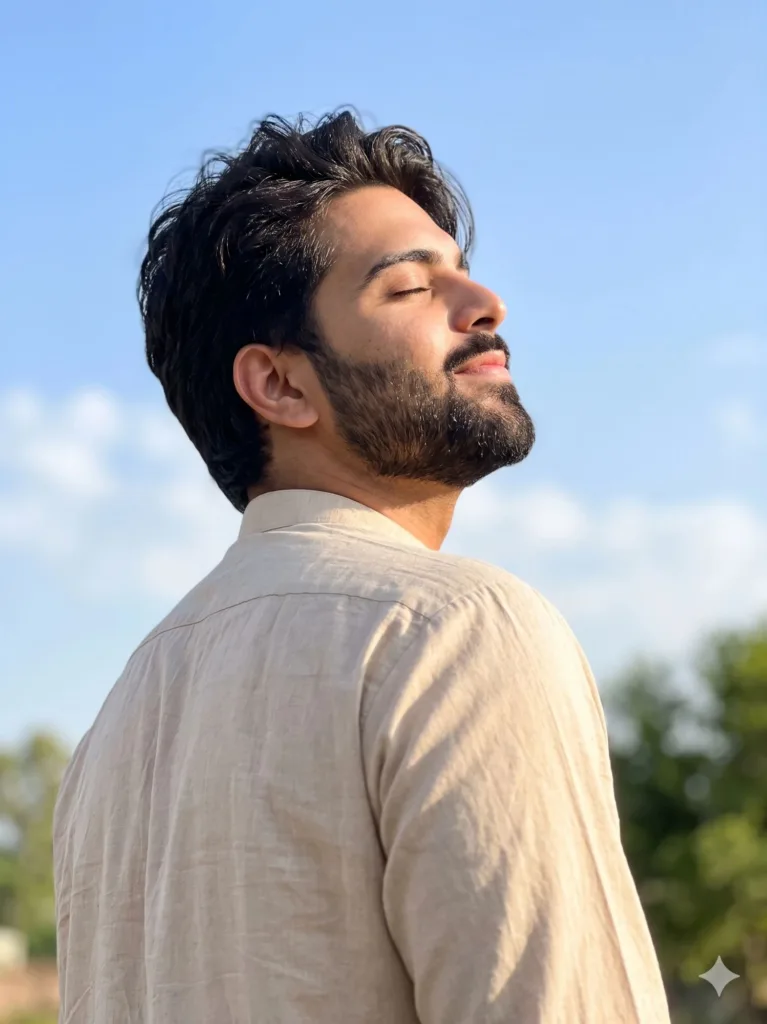
Prompt Used:
Ultra-realistic accidental iPhone photo of a young South Asian man (use uploaded face if any), standing outdoors under a bright blue sky with soft clouds.
Wearing a light-colored simple shalwar kameez, natural fabric texture and slight wrinkles. Slightly messy hair with natural shine.
Candid unposed moment eyes closed, faint relaxed smile, face tilted slightly upward toward sunlight, calm peaceful expression. No glasses.
Shot vertical, medium-back angle (from behind with slight head turn), imperfect framing, slight tilt, mild motion blur, harsh natural sunlight with warm backlight, soft shadows, slight highlight overexposure, real skin texture, no retouching.
Background: open sky dominant, minimal environment, natural Pakistani outdoor setting.
–ar 9:16 –style raw –v 6 –chaos 10
This scene works because it avoids trying too hard. The subject isn’t “posing”; he’s simply existing in the frame. The backlight, slight overexposure, and imperfect angle all contribute to that accidental feel you’d expect from a real phone capture.
Scene 2: Cold Air, Warm Presence
📸 Image Placeholder

Prompt Used:
Ultra-realistic accidental iPhone photo of a young South Asian man (use uploaded face exactly), standing outdoors in a cold northern Pakistan setting (snowy mountains and a partially frozen lake in background, slightly blurred).
Wearing a thick charcoal grey oversized knitted sweater with natural wool texture, black denim jeans with a simple leather belt, and round red-tinted sunglasses. Hands casually in pockets, relaxed stance with slight slouch, not posing.
Candid moment neutral expression, looking slightly away, natural beard and mustache (not overly groomed).
Shot vertical on iPhone, eye-level, imperfect framing, slight tilt, mild motion blur, cold natural daylight, soft shadows, slight haze, real skin texture, no retouching.
Background: snowy landscape with uneven texture, not overly clean, natural depth but not heavy bokeh.
–ar 9:16 –style raw –v 6 –q 2 –chaos 9
Here, the realism comes from restraint. The environment isn’t overly dramatic, the pose isn’t deliberate, and even the background avoids looking “too perfect.” That slight haze and uneven snow texture quietly sell the illusion.
Scene 3: A Night Full of Emotion
📸 Image Placeholder
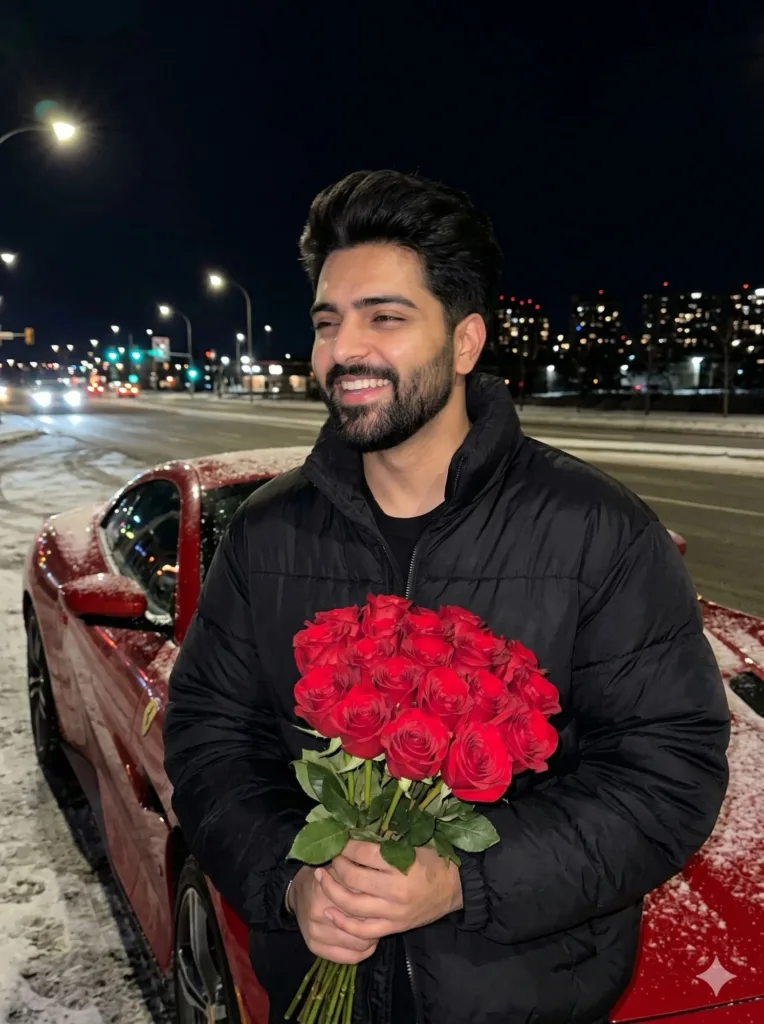
Prompt Used:
Ultra-realistic accidental iPhone photo of a young South Asian man (use uploaded face exactly), standing outdoors at night holding a large bouquet of fresh red roses.
He wears a black oversized puffer jacket, slightly unzipped, natural folds and fabric shine, no glasses. Expression emotional and real subtle surprised smile, eyes slightly squinted from joy, looking slightly off-camera.
He is standing beside a red luxury sports car (partially visible, not perfectly framed), with reflections from streetlights on the body. Light snow on ground and car surface.
Shot on iPhone, vertical framing, slightly low angle, imperfect composition, mild motion blur, harsh mixed lighting from street lamps and car headlights, strong contrast shadows, real skin texture, no retouching.
Background: dark nighttime parking street with minimal details, faint city lights bokeh, slightly messy realistic environment.
–ar 3:4 –style raw –v 6 –chaos 10
This scene leans into contrast emotion against darkness, soft snow against harsh lighting. The slight chaos in lighting and framing makes it feel like something captured spontaneously, not designed.
How These Images Feel So Real
What ties all these together isn’t just detail it’s imperfection. When using Google Gemini, the goal shouldn’t be perfection. In fact, perfection often breaks realism.
A few patterns worth noticing:
• Slight camera tilt instantly removes the “AI-generated” feel
• Mixed lighting (especially at night) adds unpredictability
• Natural textures wrinkled fabric, uneven snow, imperfect skin make a huge difference
• Expressions should feel incomplete, not exaggerated
Most importantly, every scene feels like it was captured, not created.
Final Thoughts
Realism in AI images doesn’t come from adding more it comes from holding back. The more you allow small flaws, awkward framing, and natural lighting to exist, the closer you get to something believable.
These prompts aren’t just instructions they’re observations of how real life looks through a phone camera. And once you start seeing those patterns, generating lifelike visuals becomes far more intentional.
If you experiment with this approach, you’ll notice something interesting: the best images are usually the ones that feel like accidents.
Try Google Gemini Here:
This blog post and AI prompts were created by Shahbaz Ahmad.
Follow me on TikTok @Dudefrompak for more ready-to-use prompts.

📢 Join Our WhatsApp Channel
Get daily AI photo editing prompts, tools, and tips directly on your phone.
Join Now on WhatsApp 🚀