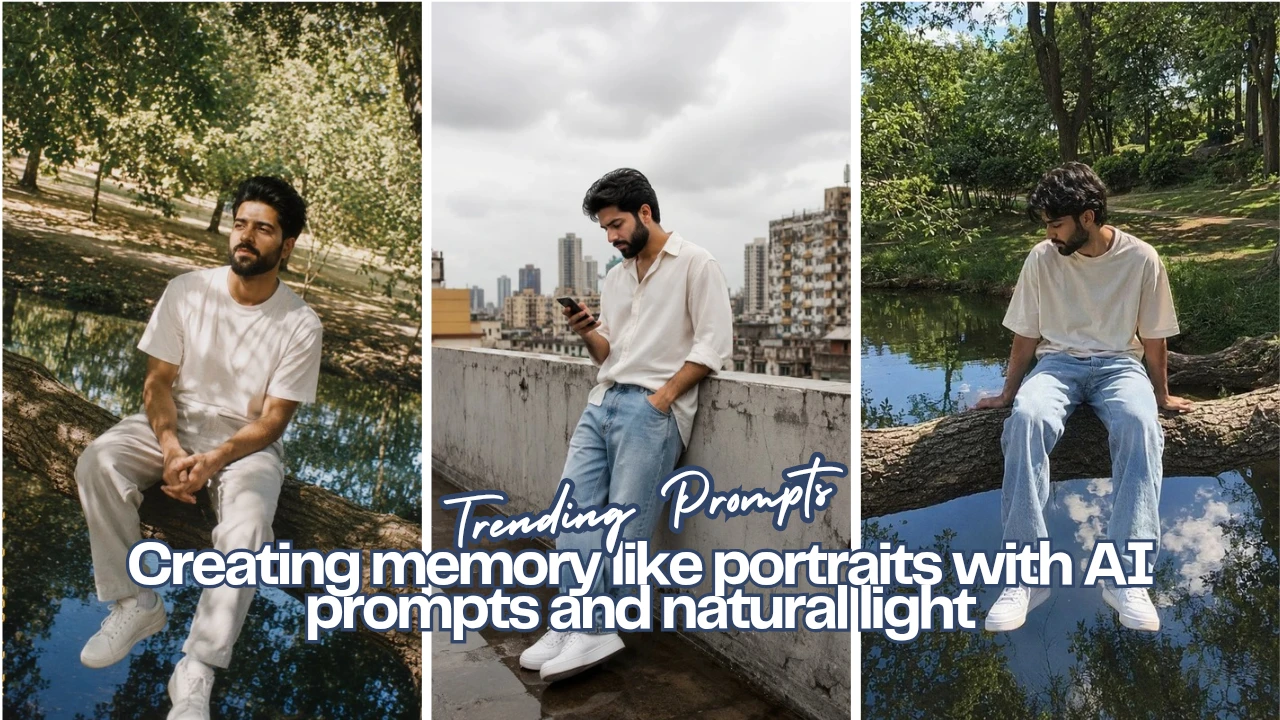
There’s something about imperfect photos that makes them feel more personal slight blur, washed sunlight, a timestamp in the corner, a frame that looks almost accidental. Those details often carry more emotion than a perfectly polished image. For this series, the goal was to create portraits that feel like forgotten memories: the kind of photos you’d discover years later in an old album or buried in a family archive.
Using ChatGPT for prompt-building, the idea was to shape a small visual story around one person moving through quiet spaces — first surrounded by summer trees and water, then ending in an urban rooftop setting under soft clouds. Each prompt was designed to keep the realism intact while letting the atmosphere carry the emotion.
Scene 1: A Tree, Sunlight, and the Feeling of an Old Summer
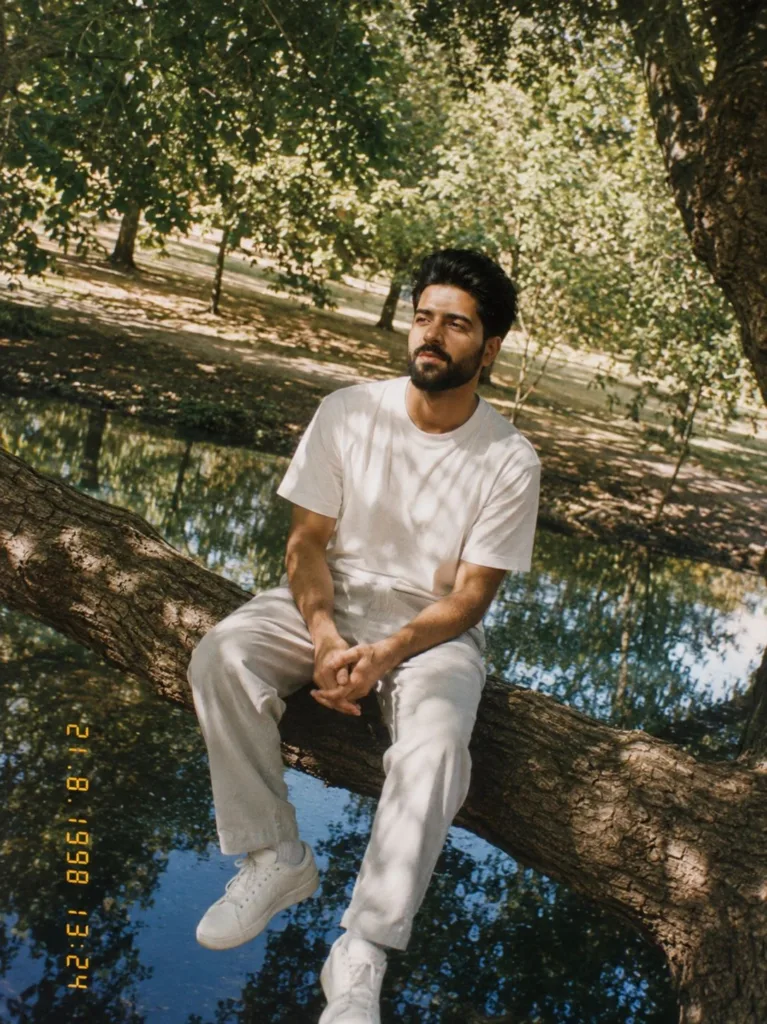
The first image was built around a simple moment: sitting on a large tree branch over still water. The focus wasn’t dramatic action, but stillness — the kind of silence that only exists on a hot afternoon when the leaves move just enough to cast shifting patterns of light.
Prompt used:
A slightly high-angle medium-long shot captures a young adult South Asian man sitting on a large tree branch that extends horizontally across a lush, sun-dappled park. He is dressed in a white t-shirt and pale gray pants with white sneakers, no glasses, and is resting with his hands loosely clasped in his lap while gazing off-frame, his face bearing softly defined features and straight, tousled hair with model-like quality. The tree bark displays coarse, rugged textures, and the water below reflects the sky and overhanging branches, creating a tranquil, mirrored surface. The ground and background show dry grass and scattered foliage, with sunlight filtering through the leafy green canopy to create intricate shadow patterns. The lighting is soft and natural with strong dappled effects, and the color palette balances earthy browns, muted greens, and cream with accents of sky blue in the water reflection. The frame is slightly tilted and overexposed in sunlit patches, with a visible yellow digital timestamp “21.8.1998 13:24” in the lower left corner, evoking the casual, nostalgic feel of a disposable camera’s film photo with grain and lens blur, contributing to a wistful, laid-back summer mood.
Scene 2: A Different Angle, Same Memory
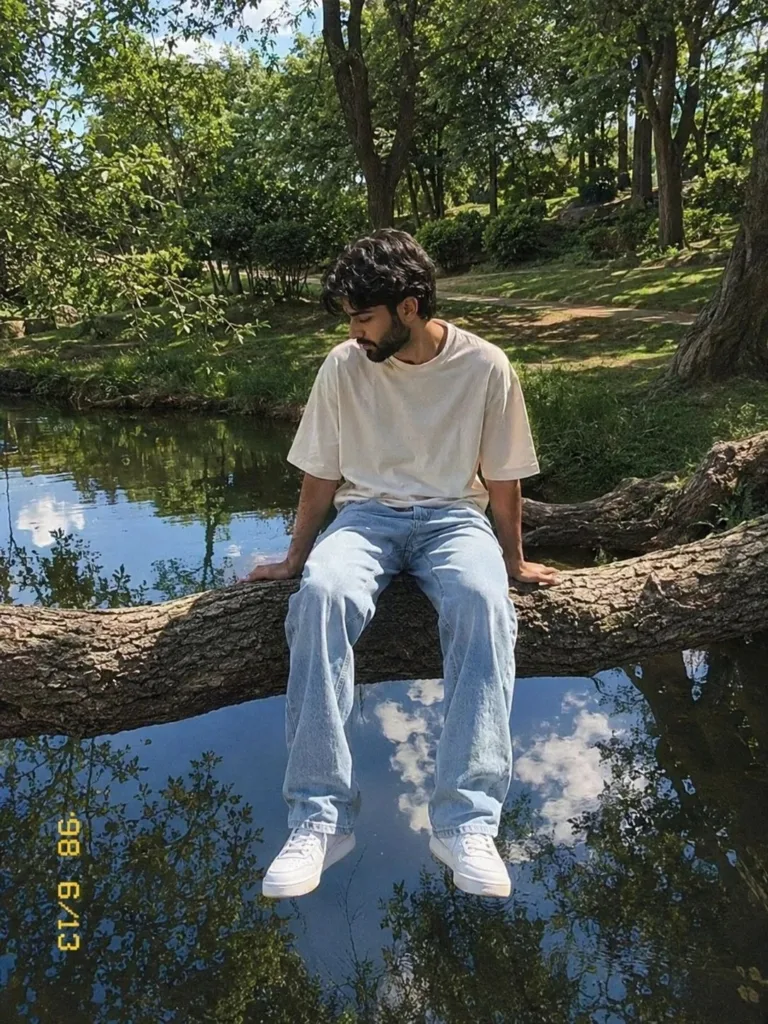
The second image kept the same location but shifted perspective. Instead of looking outward, the subject becomes more introspective — looking down, profile visible, framed by the same tree and reflective water. It feels like another photo from the same day, taken moments later.
Prompt used:
A straight-on full-body shot depicts a young South Asian man, likely in his late teens or early 20s, sitting on a thick, rough-barked tree limb that stretches horizontally over a small reflective pond, in a tranquil natural park setting. He wears a loose, pale cream t-shirt and relaxed, light-wash jeans with white sneakers, with soft fabric folds illuminated by sunlight, no glasses. His medium-length dark hair falls partially over his brow; his head is turned in profile, gazing down contemplatively at his lap, with a model-like, delicate and angular facial profile, accentuated by the soft, dappled sunlight across his cheeks. The bright summer outdoor light creates diffused highlights and faint specular reflections on clothing, while deep leafy shadows contrast with bright patches of sun. The background displays textured green grass, earthy pathways, scattered shrub foliage, and knotted tree trunks. The pond beneath reflects the wild blue sky and overhead green canopy, while feathery cloud shapes adorn the water’s surface. The shot is captured with a vintage camcorder or older digital device, evidenced by low resolution, visible digital compression, and yellow 90s timestamp text (reading “98 6/13”) in the lower left quadrant. The image’s dominant earthy browns and bright blue-greens combine to evoke a nostalgic, peaceful, almost ethereal mood.
Scene 3: Shifting the Story to the City
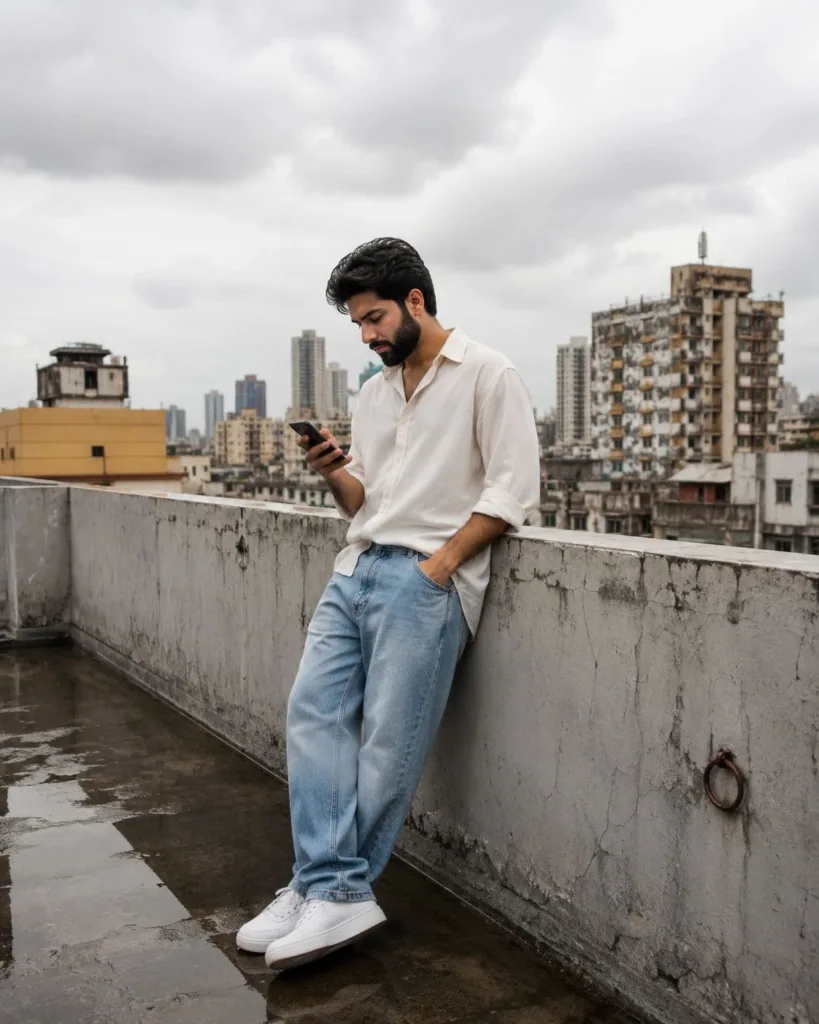
The final scene moves away from nature and places the same subject on a rooftop. It creates contrast: the calm softness of the park becomes something quieter and heavier, shaped by concrete, wet floors, and city buildings under clouds. The story still feels connected, but now the setting changes the emotional weight.
Prompt used:
Ultra realistic cinematic photo of a young man on a rooftop during a cloudy afternoon, leaning against a concrete wall while using his phone. Wearing a casual light shirt, loose blue jeans, and white sneakers. Wet rooftop floor, urban buildings in background, natural pose, realistic skin texture, soft daylight, candid street photography, moody atmosphere, 35mm lens, highly detailed.
How the Images Were Shaped
The process wasn’t just writing long prompts. The strongest result came from controlling three layers in each image:
1. Environment details — specific objects like tree bark, water reflections, rooftops, and concrete walls.
2. Camera flaws — slight tilt, grain, overexposure, digital timestamps, and lens softness.
3. Mood cues — words like wistful, peaceful, moody, or ethereal subtly shift the outcome.
When these combine, the generated image stops feeling like a clean render and starts feeling like something captured in a real moment.
A useful approach is to treat the prompt like directing a photograph: define the subject, then the camera, then the emotional tone. OpenAI image tools overview can help with iterative prompt refinement if you’re experimenting with variations.
Why These Aesthetic Images Work
What makes these scenes feel convincing is not perfection. It’s the opposite — the blur in sunlight, timestamps, slight low-resolution artifacts, and natural body posture. Real memories are rarely sharp or balanced. They are partial, uneven, and a little flawed.
That’s what gives these images their emotional pull: they look less like “AI art” and more like fragments from a real life that happened somewhere between summer afternoons and cloudy rooftops.
Final Thoughts
A single aesthetic photo can be beautiful, but a sequence creates something stronger — a sense of time. In this set, the park scenes feel like a forgotten afternoon from years ago, while the rooftop shot feels like the present catching up. Together, they create a quiet narrative without needing dialogue.
That’s often where AI image creation becomes most interesting: not when each image stands alone, but when several prompts are used to build a mood, a memory, or a story that feels lived-in.
Try ChatGPT for your aesthetic creations here:
This blog post and AI prompts were created by Shahbaz Ahmad.
Follow me on TikTok @Dudefrompak for more ready-to-use prompts.

📢 Join Our WhatsApp Channel
Get daily AI photo editing prompts, tools, and tips directly on your phone.
Join Now on WhatsApp 🚀