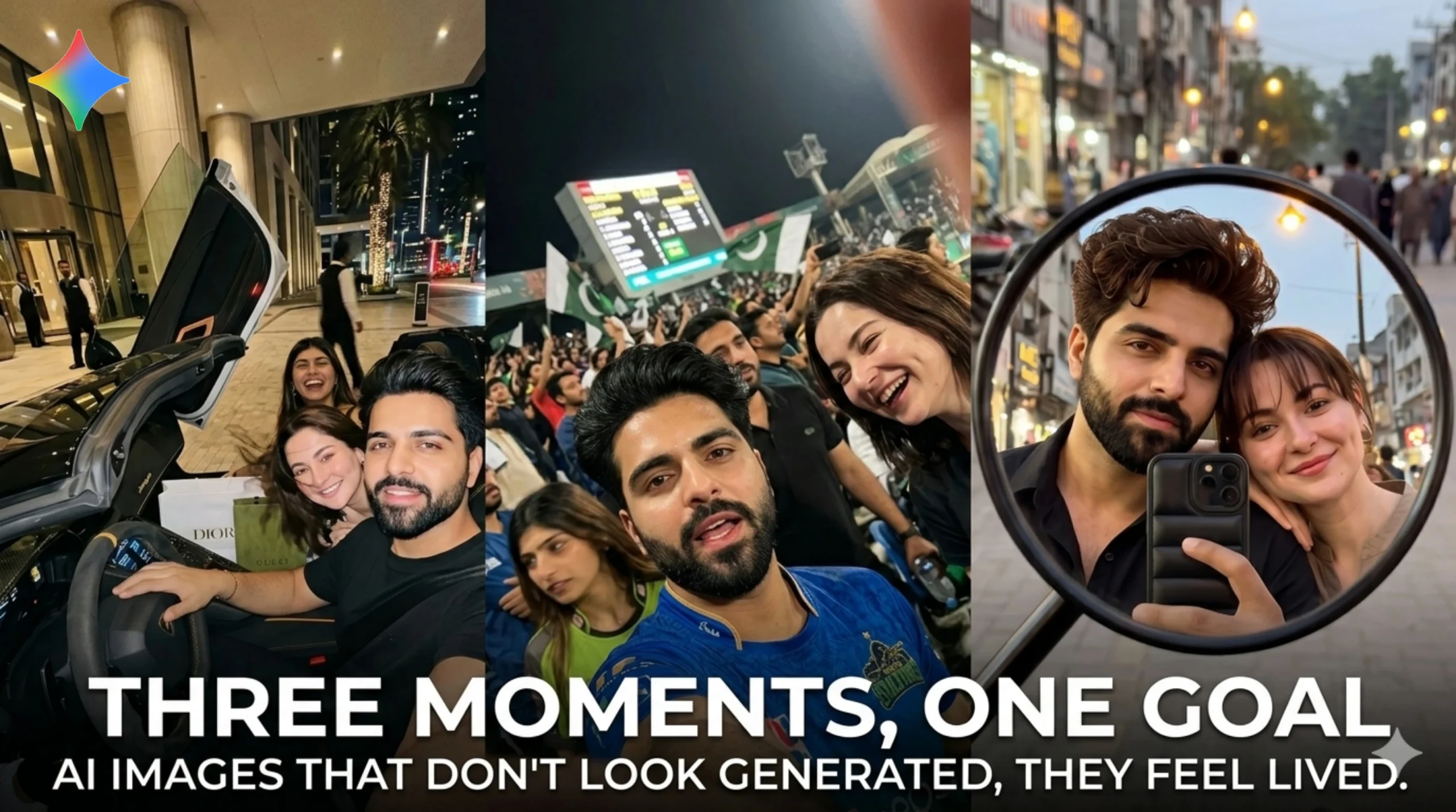
There’s a big difference between AI images that look good and AI images that feel real. Most people can generate something visually impressive but the moment you look closer, it falls apart. Perfect lighting, flawless skin, symmetrical composition… it screams artificial.
What I wanted was the opposite.
I wanted images that feel accidental. Messy. Human. The kind you’d actually believe someone captured in the moment whether it’s a luxury night out, a chaotic cricket match, or a quiet street moment.
Using Google Gemini, I experimented with three very different scenarios, all built around one idea: controlled imperfection.
Below are the exact scenes, prompts, and what each image is trying to achieve.
Scene 1: Luxury Night Selfie Raw, Unfiltered Moment
Prompt Used:
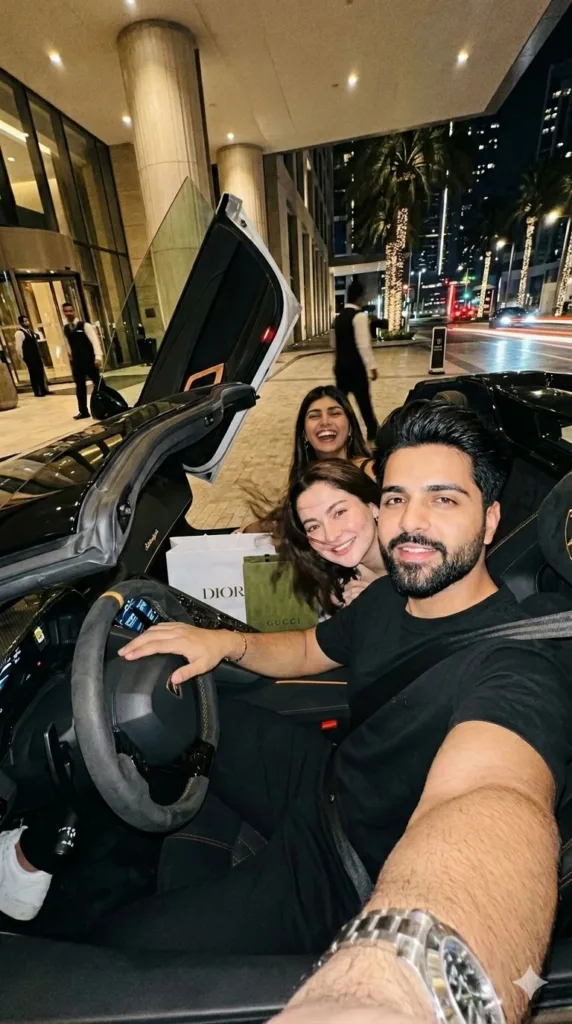
A candid night front-camera selfie of Subject A (male) sitting in a luxury sports car with the doors open at a hotel entrance, holding the steering wheel with one hand while capturing the moment at arm’s length. Subject B (female) leans in close with a playful smile, while Subject C (female) appears slightly behind, laughing naturally. Shopping bags rest on the seat, and the background shows a lively hotel area with lights, cars, and people moving. Warm night lighting creates a real, slightly imperfect selfie look with natural expressions, subtle motion, and an unposed, spontaneous vibe. –ar 9:16
This scene is all about effortless status without trying too hard. The open scissor doors, valet movement, and designer bags create context but the real focus is the imperfection in the selfie.
Notice how:
The framing isn’t centered
Expressions aren’t synchronized
Lighting feels uneven and real
That’s what makes it believable. Most AI generations fail here because they try to “perfect” the image. This prompt does the opposite it forces realism through flaws.
Scene 2: PSL Stadium Selfie Chaos Over Perfection
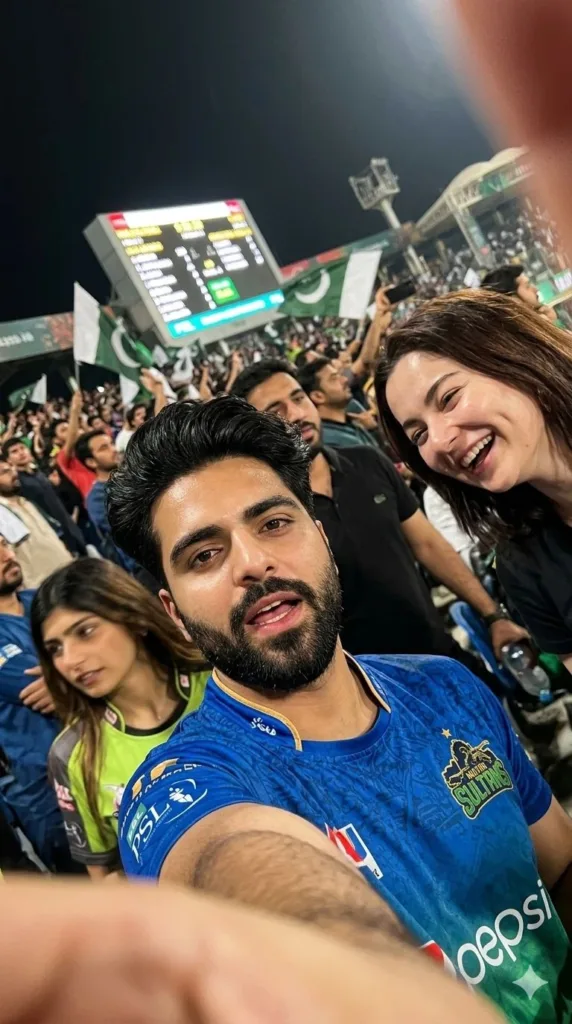
Prompt Used:
An accidental front-camera selfie of Subject A (male) during a high-energy cricket match at night, captured mid-movement with a tilted, imperfect frame. Subject B (female) leans into the shot slightly off-center with a mid-reaction expression, while Subject C (female) appears partially in frame, slightly blurred as she laughs or turns. Bright stadium lights create uneven highlights, and the crowded background feels chaotic with people, flags, and motion. The image looks unplanned and messy, with natural skin texture, slight blur, and a raw, real smartphone selfie vibe. –ar 9:16
This is where realism gets pushed further.
Instead of trying to make everyone look good, the prompt intentionally breaks composition:
Faces are partially cut
Motion blur is present
Lighting is harsh and inconsistent
Background is louder than the subjects
That “mistake energy” is what sells it. Real selfies especially in stadiums are rarely clean. They’re rushed, shaky, and unpredictable.
Ironically, the more wrong it looks, the more real it feels.
Scene 3: Mirror Street Selfie Quiet Cinematic Intimacy
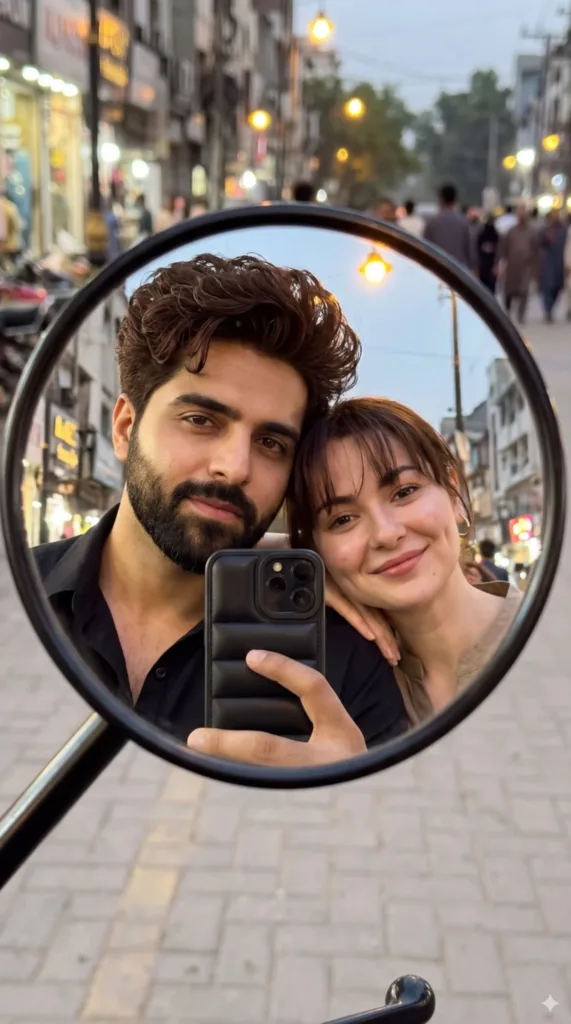
Prompt Used:
A candid mirror selfie of Subject A (male) and Subject B (Female) captured through a motorcycle side mirror on a city street in the evening. Subject A holds the phone while both lean slightly toward each other with relaxed, natural expressions. Warm street lights reflect softly on the mirror, with a subtle background of shops and street activity. The moment feels intimate and unplanned, with natural skin texture, casual clothing, slight reflections, and a real everyday smartphone vibe. –ar 9:16
After chaos, this scene shifts into something calmer.
Here, realism comes from subtlety:
Natural body language instead of dramatic posing
Soft lighting instead of harsh contrast
Gentle imperfections in reflection and framing
The motorcycle mirror adds a layer of depth it limits the frame naturally, which removes that overly “designed” AI look.
It feels like a moment you didn’t plan… but you’re glad you captured.
The Process: How I Made These Look Real in Gemini
Instead of relying on short prompts, the key was over-specifying reality.
Here’s what actually made the difference:
1. Identity Lock
Every subject is grounded in real facial structure no beautification, no smoothing.
This prevents the “AI face” effect instantly.
2. Imperfect Camera Logic
I didn’t just say “selfie” I defined:
Angle
Hand position
Lens distortion
Framing mistakes
That’s what turns an image from rendered to captured.
3. Environmental Noise
Real life isn’t clean:
Moving people
Uneven lighting
Random background clutter
Adding these details makes scenes feel lived-in.
Final Thoughts
The biggest mistake people make with AI images is chasing perfection.
But realism doesn’t come from perfection it comes from imperfection that makes sense.
When you start thinking in terms of:
“How would this actually be captured?”
“What would go wrong in this moment?”
“What details would a real camera accidentally include?”
That’s when AI stops looking like AI.
And honestly, that’s the difference between an image people scroll past… and one that makes them stop and wonder if it’s real.
Try Google Gemini Here:
This blog post and AI prompts were created by Shahbaz Ahmad.
Follow me on TikTok @Dudefrompak for more ready-to-use prompts.

📢 Join Our WhatsApp Channel
Get daily AI photo editing prompts, tools, and tips directly on your phone.
Join Now on WhatsApp 🚀