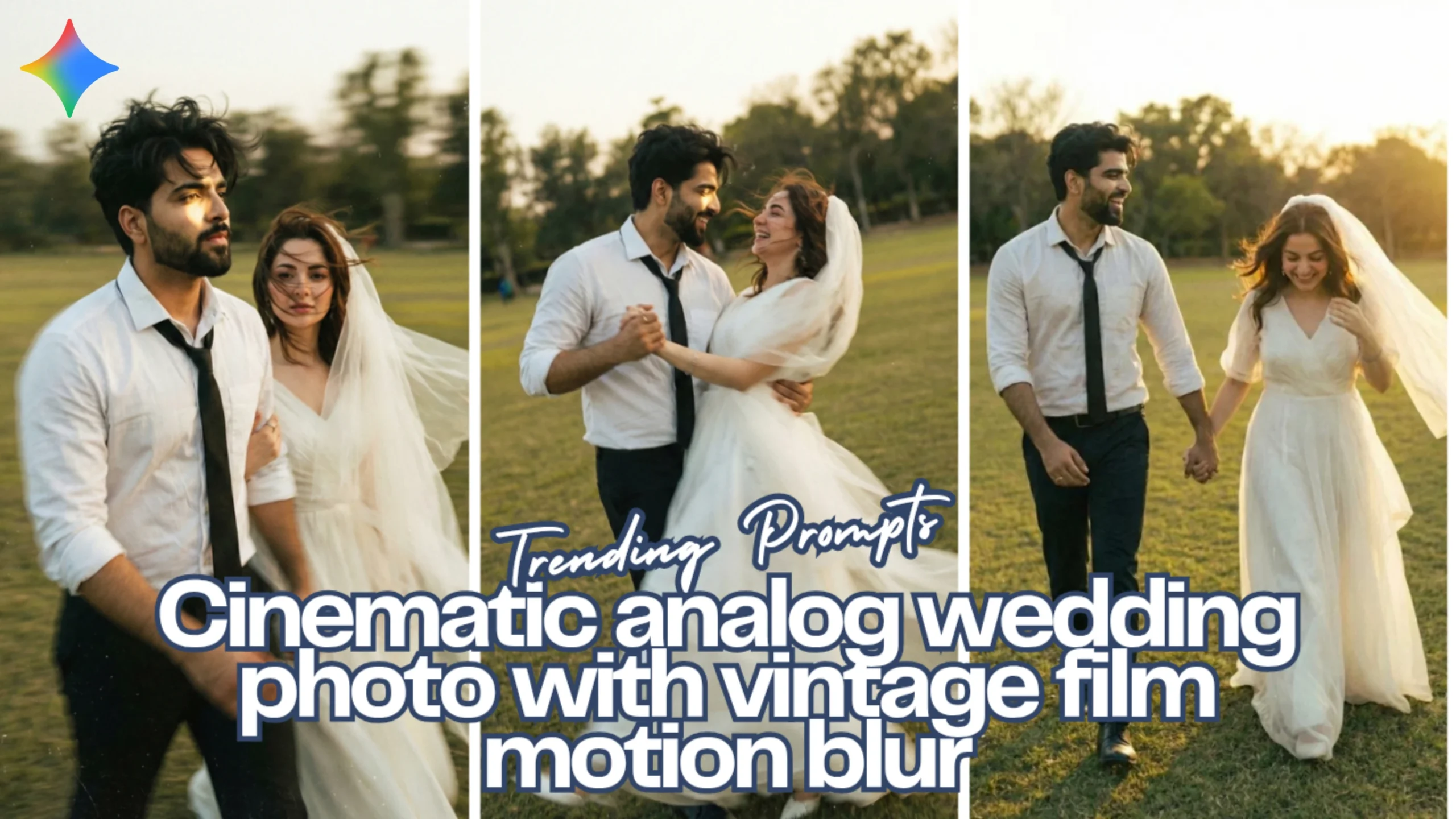
There’s a certain kind of photograph that doesn’t look staged or technically perfect and that’s exactly why it works. Instead of freezing a moment into something polished and controlled, it lets the motion stay visible. The blur, the grain, the uneven light all of it adds up to something that feels closer to memory than documentation.
Think about an outdoor frame shot in low light, built around that old 1990s analog film mood. Not the modern retro filter version, but the kind that feels slightly rough around the edges. A wide green field stretches behind the subjects, trees standing at a distance, softened by blur and depth. The space feels open and quiet, almost like the scene exists away from everything else. That openness gives emotional scale it makes the people inside the frame feel like they’re moving through a real moment, not posing inside a setup.
Two people walk forward through the shot instead of standing still for it. That detail changes everything. The man is slightly ahead, turning his head back toward the camera as if he noticed it a second too late. His hair is caught in the wind, his shirt not perfectly arranged, his tie loose enough to break the formality. Light hits one side of his face more strongly than the other, shaping it instead of flattening it. Because there’s motion blur, the expression isn’t razor sharp and oddly enough, that makes it feel more alive.
Next to him, the woman holds his arm and moves in step. Her veil and dress lift slightly in the breeze, catching highlights and then fading into softness at the edges. She looks toward the lens too, but it doesn’t read like a practiced pose. It feels more like awareness like she noticed the camera in passing rather than performing for it.
What gives this kind of image its character is controlled imperfection. Motion blur stays heavy around movement arms, fabric, background while the faces remain more readable. Grain sits across the frame, not overwhelming but present. There might be tiny scratches, faint light leaks, a bit of texture in the color. The tones lean slightly warm with green-yellow bias, the way older film often did without trying to be stylish about it.
Perfect clarity can be impressive, but it can also feel distant. A frame with texture and motion tends to feel closer. Less like a product, more like a memory someone almost missed capturing.
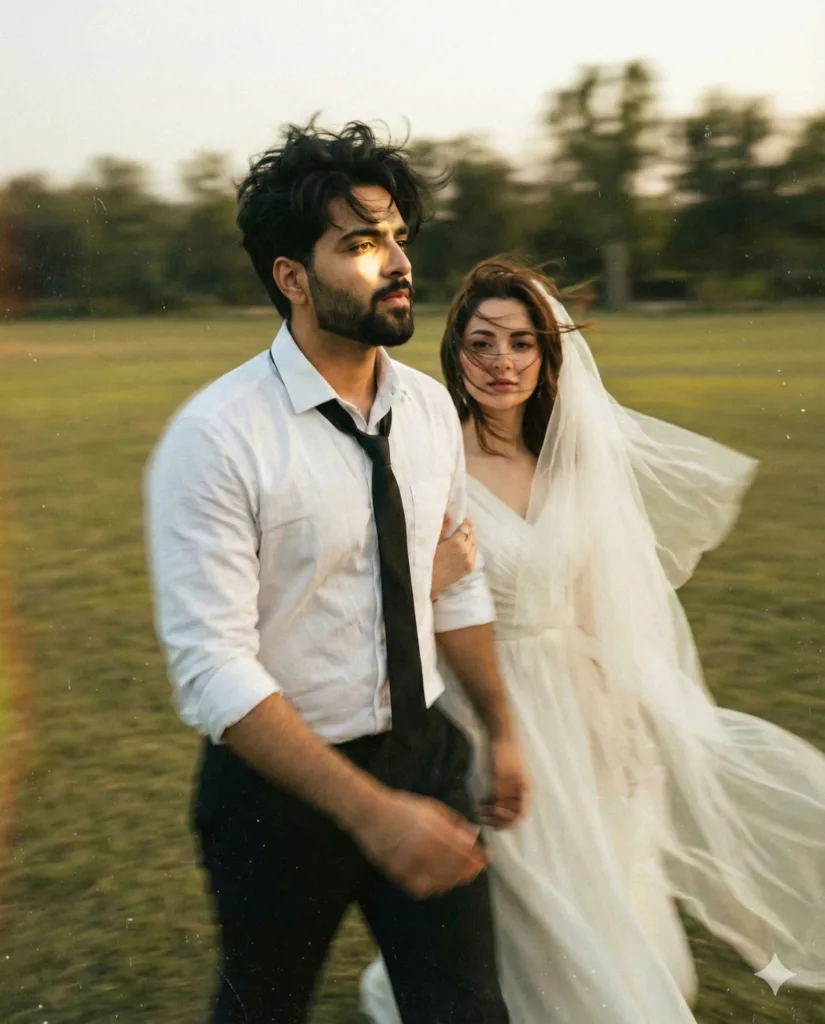
An outdoor shot with low lighting and strong motion blur, shot in the style of vintage 1990s analog film. The atmosphere is cinematic, candid, and expressive.
Two people walk slightly forward across a large, open field of lush green grass, with several large, leafy trees providing a natural backdrop. The environment feels expansive and serene, adding emotional distance and cinematic scale.
The athletic male subject walks slightly ahead, slightly turned back, and glances at the camera. His hair is blowing in the wind. Sharp, directional lighting hits his face, while his expression is slightly blurred to emphasize movement. He has messy voluminise hair, trimmed beard and chiseled jawline. No glasses. He wears a slightly messy, imperfect white shirt, paired with a thin, loosely worn black tie, giving the wedding a raw, unpolished look.
Beside him, a beautiful female subject (same as female reference image of provided) walks, holding his arm. She glances at the camera. Her hair is blowing in the wind. The sharp lighting highlights her face, with a slight motion blur effect on her expression. She is wearing an elegant white wedding dress with a soft veil flowing in the breeze.
Visual Effects:
Strong motion blur concentrated on the arms, surroundings, flowing fabric, and veil.
Thick bokeh coverage throughout the frame, leaving only the face relatively sharp.
Subtle and soft analog film grain.
Light scratches and soft light leaks.
Film Style & Color:
1990s analog film look
Subtle organic textures
Honest digital noise
Retro color settings
Soft green-yellow tones
Cinematic documentary realism, honest, and expressive.
Background clarity is intentionally blurred.
4:5 aspect ratio.
Do not distort the face
Then type this to generate another best pose after generating the first image.
Give me another best pose.
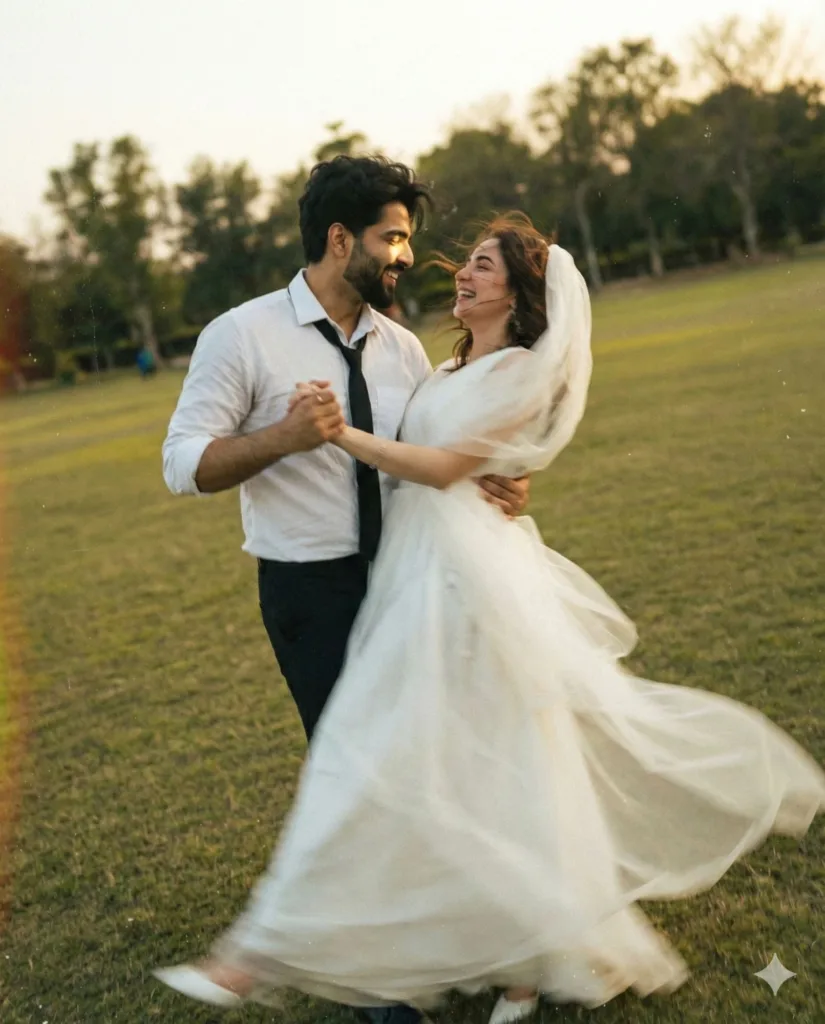
In the end, that’s probably why this style continues to resonate. Real moments are rarely clean and perfectly lit. They’re windy, uneven, half-blurred, slightly chaotic. When an image keeps those qualities instead of correcting them away, it doesn’t just show what happened it suggests what it felt like to be there.
Try Google Gemini Here:
This blog post and AI prompts were created by Shahbaz Ahmad.
Follow me on TikTok @Dudefrompak for more ready-to-use prompts.

📢 Join Our WhatsApp Channel
Get daily AI photo editing prompts, tools, and tips directly on your phone.
Join Now on WhatsApp 🚀