Most AI portrait prompts fail for a simple reason: they describe clothes and lighting, but not intent. Real editorial-looking images come from scene thinking, not keyword stacking. When the environment, pose, and lighting logic connect, the image starts to feel photographed instead of generated.
I’ve been testing different nightlife and luxury-interior prompt structures, and three setups consistently produce strong, believable results. Each one creates a different mood — rooftop confidence, fashion drama, and cinematic motion — while keeping facial identity locked and realistic.
Here’s how each one works and why it matters.
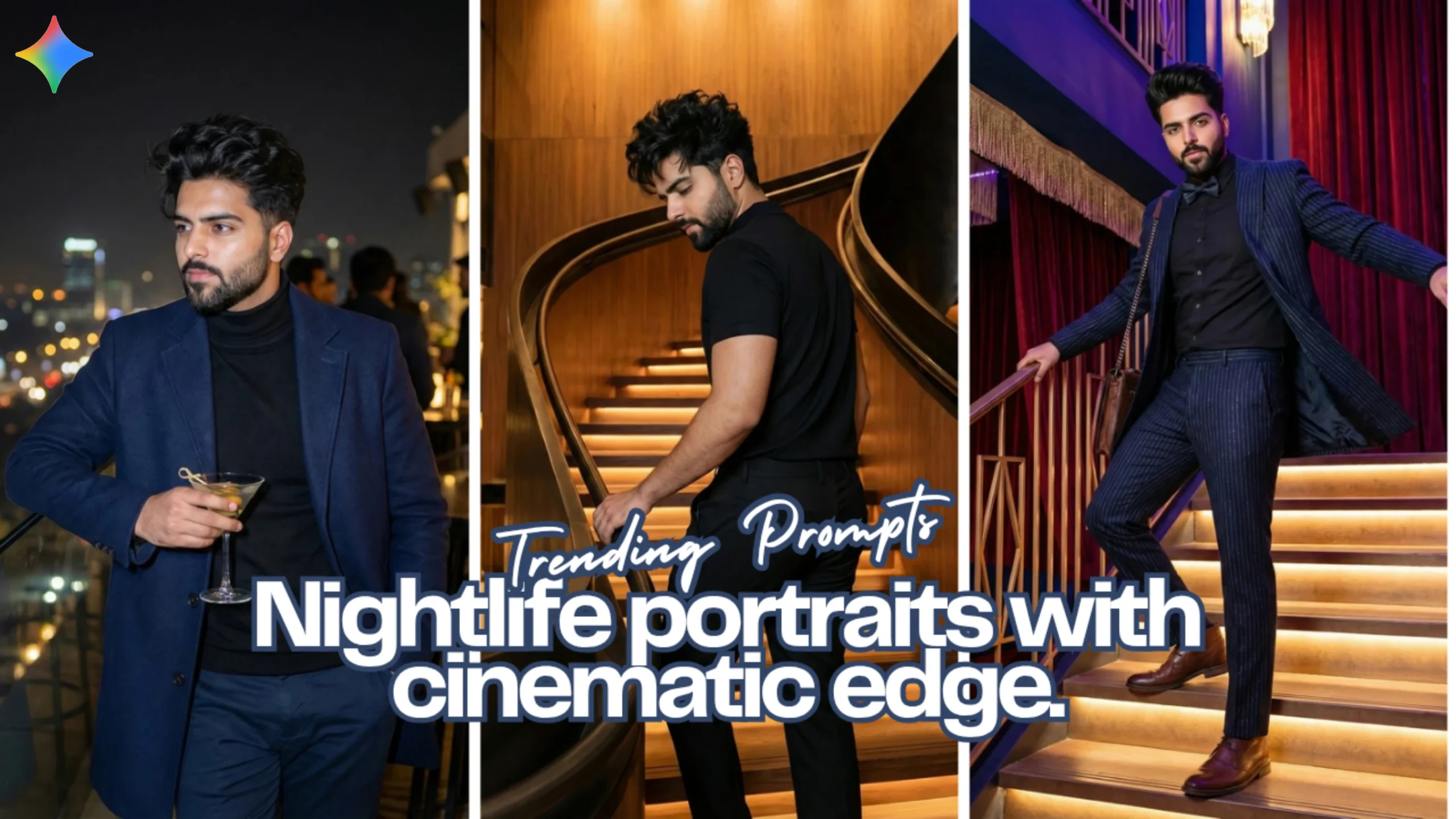
Rooftop Night Portrait Flash + City Glow Contrast
This prompt style works because it mixes two lighting worlds that normally don’t appear together: harsh direct flash on the subject and soft city glow in the background. That contrast makes the portrait pop instantly.
The rooftop bar setting overlooking Islamabad gives context without stealing attention. Leaning against a railing, body turned slightly away, drink in hand it creates a candid moment instead of a stiff pose. That “not trying too hard” body language tends to generate more believable images than front-facing stance prompts.
The clothing direction dark tailored layers and simple textures is doing quiet work here. It keeps visual noise low so the face stays dominant. Strong flash plus preserved skin texture also prevents the plastic smoothing effect that ruins many AI portraits.
This setup is reliable when you want a confident nightlife identity shot that still feels spontaneous.
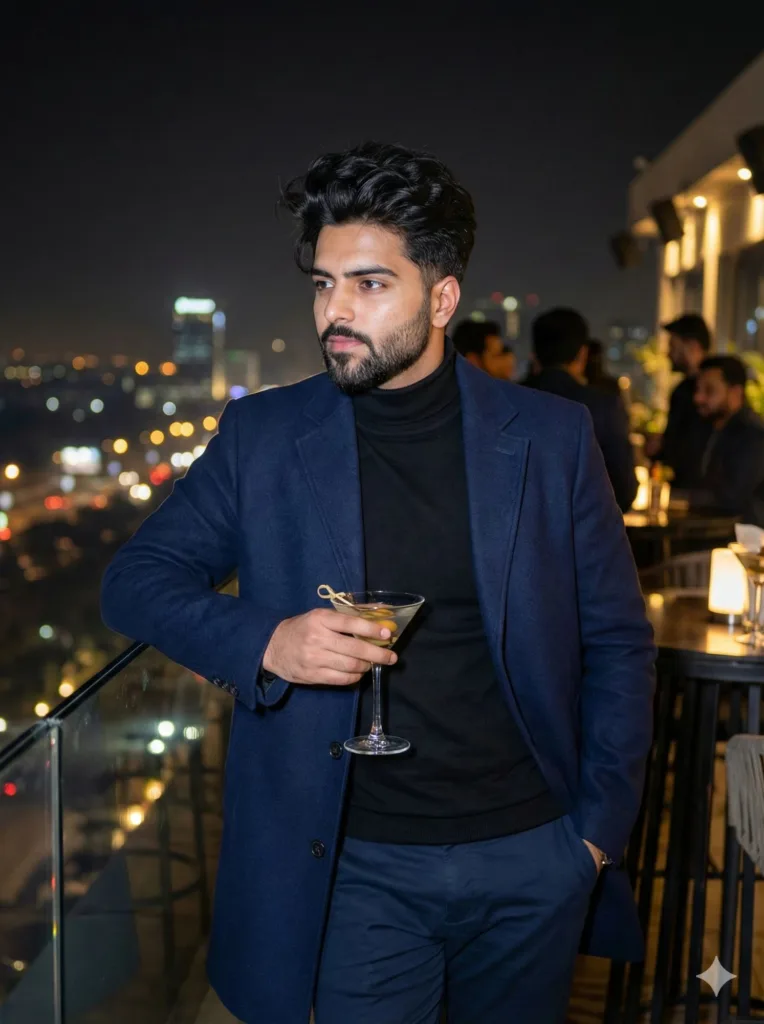
Ultra-realistic cinematic night portrait, male version use the uploaded reference image as the only identity source and preserve 100% identical facial geometry, skin tone, and facial structure with zero deviation. Subject has messy voluminous hair, trimmed beard, and a sharply chiseled jawline, no glasses.
Impromptu, sharply focused waist-up shot at a chic hotel rooftop bar overlooking the glittering Islamabad skyline at night. He stands leaning casually against a glass railing, body slightly angled, gaze turned away from the camera with a calm, self-assured expression, holding an elegant garnished martini glass in one hand.
Wardrobe: tailored navy blue wool coat layered over a black fitted turtleneck shirt and navy premium chinos, refined modern styling, natural fabric texture visible. Subtle metallic necklace detail allowed but minimal.
Lighting: strong direct on-camera flash for crisp facial detail and high contrast, natural skin texture preserved (no plastic smoothing), realistic pores and micro-details. Background shows cinematic bokeh city lights, rooftop bar ambience, silhouettes of stylish patrons, soft warm accent lighting.
Lens look: full-frame DSLR realism, shallow depth of field, true-to-life color science, sharp subject separation, editorial nightlife photography, 8K photoreal detail.
Staircase Fashion Shot Controlled Drama Works Better Than Random Style
A lot of people try “luxury fashion” prompts and end up with messy results because nothing anchors the pose. This staircase setup fixes that by giving the body something to interact with steps, railing, elevation difference. That alone improves posture realism.
The sideways stance with one leg raised creates shape and tension in the frame. It’s a classic editorial trick, and AI responds well to it when described clearly. The upscale club interior velvet, gold rails, colored ambient lighting adds depth without requiring complicated camera instructions.
Formal wardrobe choices push the image into fashion territory instead of influencer territory. That distinction matters. Structured clothing generates sharper silhouettes, which helps the model separate subject from background.
This is the one to use when you want presence and authority rather than casual charm.
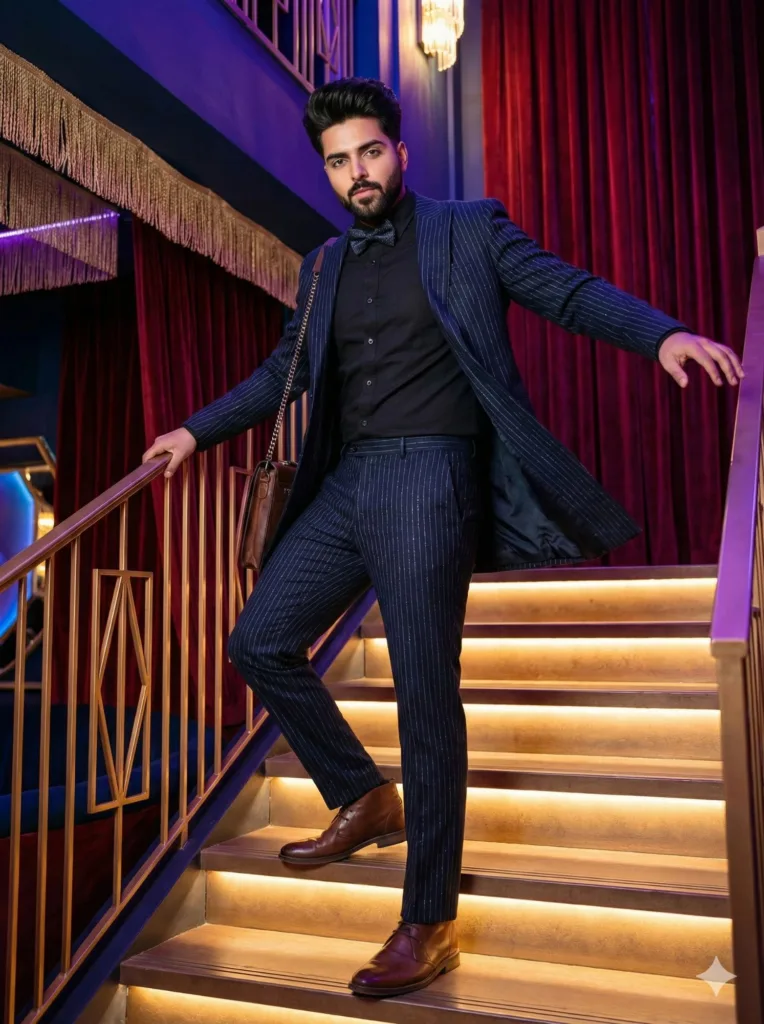
A high-resolution, glamorous nightlife fashion photograph of a young man posing confidently on an elegant indoor staircase in a luxury club or upscale lounge environment. He is positioned mid-stair, standing sideways with one leg bent and lifted onto a higher step, emphasizing a strong, confident pose, while the other leg extends downward. His posture is poised and powerful, with one hand resting lightly on a gold-toned geometric railing and the other extended behind him, creating balance and a striking silhouette. He has messy voluminise hair, trimmed beard and chiseled jawline. No glasses. His skin tone is fair with a warm glow enhanced by dramatic artificial lighting. His facial features are refined and symmetrical, with light-colored eyes looking directly at the camera, softly defined brows, subtle contouring, and elegant evening makeup that remains natural yet polished. His expression is confident and composed, with relaxed lips and a steady, self-assured gaze. He is wearing a fitted black Oxford shirt paired with pinstriped navy coat, bowtie and pinstripe trouser with a subtle sparkle or textured finish, paired with brown chuka boots. A leather briefcase with a chain strap rests against his side, adding a luxury accent. The environment features rich red velvet curtains, gold metal railings with geometric patterns, softly illuminated stair steps with built-in lighting, and decorative hanging fringe elements to the side. The background is filled with moody, colorful ambient lighting in shades of purple, blue, and warm gold, creating a dramatic, high-end nightlife atmosphere. The lighting combines soft ambient glow with directional highlights, making him stand out sharply against the darker, richly textured surroundings. The overall mood is bold, elegant, and seductive yet classy, resembling a high-fashion editorial shot taken in an exclusive evening venue.
Curved Staircase Walk Movement Beats Static Posing
Still poses are easy. Natural movement is harder, but when it works, it looks far more cinematic. This third prompt is built around motion: walking upward, light hand contact on the railing, gaze lowered. It feels like a captured moment instead of a posed one.
The curved staircase is not just aesthetic curves guide the viewer’s eye and help frame the subject automatically. Warm step lighting and wood textures also produce more believable color behavior than neon or overly stylized environments.
Keeping the outfit monochrome and fitted is intentional. Busy clothing breaks motion realism. Clean silhouettes support it.
This setup is useful when you want a story frame something that looks like part of a film sequence rather than a standalone portrait.
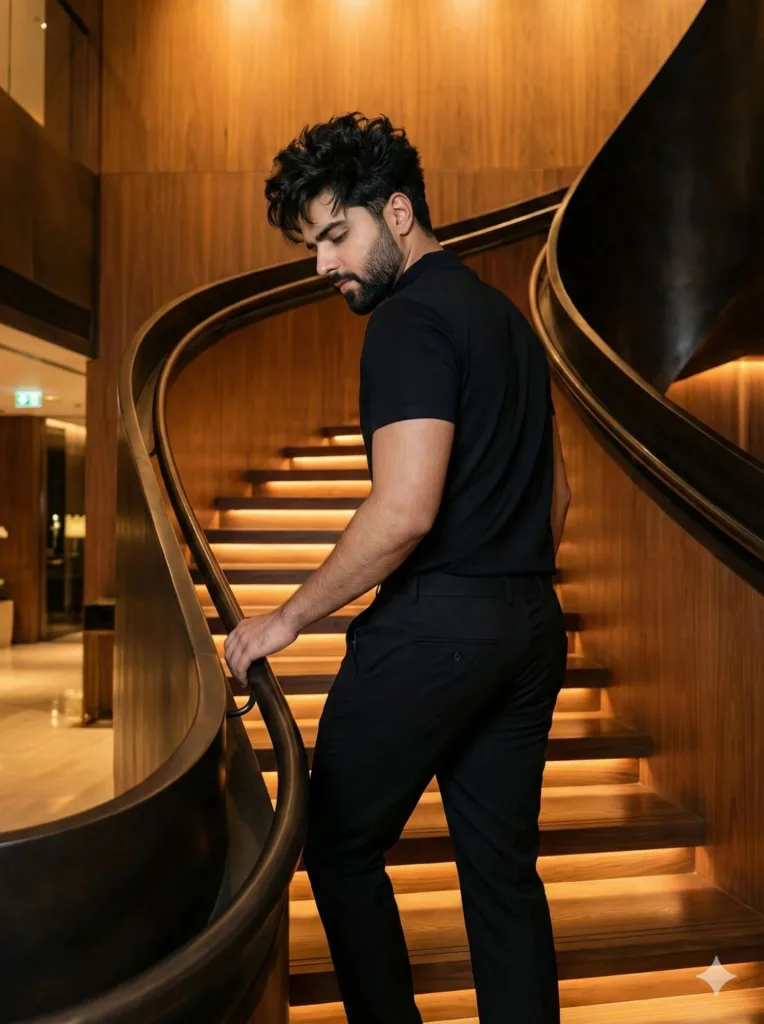
A high-resolution luxury interior fashion photograph of a young man walking upward on a dramatic, curved staircase inside an upscale, modern hotel or high-end venue. He is captured from a slightly low angle behind and to the side, emphasizing his long legs and elegant movement as he ascends the softly illuminated wooden steps. His posture is graceful and confident, with one hand lightly touching the dark, sculptural railing while his head tilts downward slightly, his gaze directed toward his hand, creating a composed, introspective mood. He has messy voluminise hair, trimmed beard and chiseled jawline. No glasses. His skin tone is fair with a warm glow enhanced by ambient golden lighting. His facial features are rugged and refined, with light-colored eyes, neatly shaped brows, no makeup, and a calm, poised expression. He is wearing a mockneck tee and tailored pants in all-black style, adding confidence and style. The environment features warm wood-paneled walls, softly glowing step lights embedded into each stair, and a sweeping, sculptural dark railing that curves elegantly through the frame. The lighting is warm, cinematic, and carefully balanced, highlighting his silhouette, legs, and outfit while creating depth and richness in the surroundings without harsh shadows. The overall color palette is dominated by warm golds, deep browns, blacks, and clean whites, creating a refined, exclusive, evening-luxury atmosphere. The image feels polished, confident, and editorial, like a high-end fashion or lifestyle shoot in an elite interior space.
Final Thought
Better AI portraits don’t come from longer prompts — they come from coherent scenes. When pose, wardrobe, lighting, and environment all point to the same mood, realism increases fast. When they conflict, the image starts to look synthetic no matter how detailed the instructions are.
Think like a photographer blocking a shot, not like a user filling a prompt box. That single shift usually changes the output more than adding another ten descriptive words.
Try Google Gemini Here:
This blog post and AI prompts were created by Shahbaz Ahmad.
Follow me on TikTok @Dudefrompak for more ready-to-use prompts.

📢 Join Our WhatsApp Channel
Get daily AI photo editing prompts, tools, and tips directly on your phone.
Join Now on WhatsApp 🚀